Light Dropper colored icon
Loading interactive 3D reference…
45% complete

Draped Cloth Shading Reference

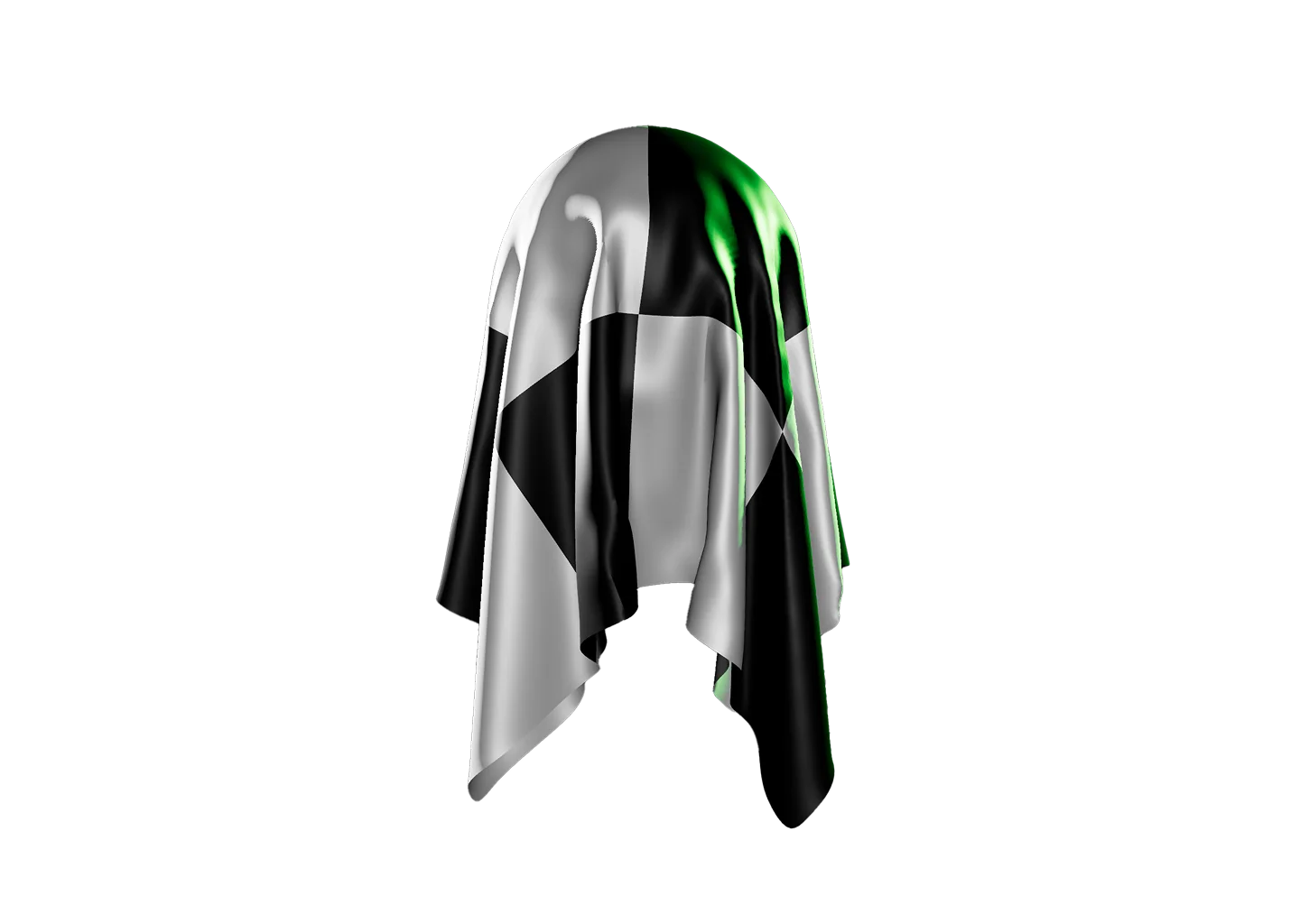
Cloth introduces a new challenge, and it matters because people wear it. Instead of simple planes or smooth curves, folds created by gravity reveal the form beneath the fabric. Long pipe folds, soft transitions, and overlapping shadows all work together to describe the rounded shape underneath.

Fortunately for this study, the cloth is draped over a sphere instead of someone’s head. The principles are the same, but the model is much better at holding still.

The checkerboard pattern helps you follow how each fold twists and changes direction, and adjusting the roughness shifts the fabric from matte to shiny. Switch to a single-color material whenever you’d like to focus purely on light, shadow, and value.

Move the cloth out of the way for a clean look at the sphere beneath, or head over to the Sphere Shading Reference for the detailed study.
Toggle Info: I
Toggle info: i
Double click to drop a light
Click-and-drag to move a light
Right click objects for options
Precision Controls
Camera Angle Presets: C
Toggle Perspective: P
Randomize Scene: R
Randomize Lights: Shift + R
Value Steps: V
Undo: Cmd + Z
Redo: Cmd + Shift + Z
Save Setup: Cmd + S
Labels → Scene Lock: L
Learn & Track
Overview → Timer: T
Reset scene
Icon of person raising their hand
Share feedback
Beta: Saved setups (N)
Reference Timer
Track how much time you spend studying this model. The timer keeps running while you sketch, draw, or paint. If the page goes unattended for several hours, Light Dropper checks in with you, then automatically pauses the timer until you return.
Timer indicator
0
Pause timerStart timer
Today
0
Yesterday
0
This week
0
Last week
0
Lifetime
0
Black and white checkered cloth draped over an object with green highlights on folds.

Draped Cloth Shading Reference

Cloth introduces a new challenge, and it matters because people wear it. Instead of simple planes or smooth curves, folds created by gravity reveal the form beneath the fabric. Long pipe folds, soft transitions, and overlapping shadows all work together to describe the rounded shape underneath.

Fortunately for this study, the cloth is draped over a sphere instead of someone’s head. The principles are the same, but the model is much better at holding still.

The checkerboard pattern helps you follow how each fold twists and changes direction, and adjusting the roughness shifts the fabric from matte to shiny. Switch to a single-color material whenever you’d like to focus purely on light, shadow, and value.

Move the cloth out of the way for a clean look at the sphere beneath, or head over to the Sphere Shading Reference for the detailed study.
A hand icon with a strikethrough
This experience requires a larger window.